

Jackery Explorer 1000 v2 vs HomePower 1000 Plus v2 vs Explorer 1500 Ultra: Which One Fits You?
Compartir
Portable power stations are easiest to compare when you start with the job—not the biggest number on the box. The Jackery Explorer 1000 v2, HomePower 1000 Plus v2 and Explorer 1500 Ultra all sit in the practical 1–1.5 kWh range, but they prioritize different things.
- Choose the Explorer 1000 v2 when carrying weight and everyday portability matter most.
- Choose the HomePower 1000 Plus v2 when you need 1,800W output now and want the option to add much more battery capacity later.
- Choose the Explorer 1500 Ultra when you want more energy in one enclosure, faster potential solar recovery and a more rugged outdoor-oriented design.
This guide compares the power-station-only configurations. Solar panels and expansion batteries are included only when the selected bundle explicitly lists them.
Quick comparison
| Feature | Explorer 1000 v2 | HomePower 1000 Plus v2 | Explorer 1500 Ultra |
|---|---|---|---|
| Battery capacity | 1,070Wh | 1,024Wh | 1,536Wh |
| Rated AC output | 1,500W | 1,800W | 1,800W |
| Surge rating | 3,000W | 3,600W | 3,600W |
| Weight | About 23.8lb | About 23.8lb | About 38.6lb |
| AC outlets | 3 | 4 | 3 |
| Maximum solar input | Up to 400W | Up to 400W | Up to 800W |
| Expansion battery support | No | Yes—Battery Pack 2000 Plus v2 | No |
| Maximum system capacity | 1,070Wh | Up to 11,264Wh | 1,536Wh |
| Highest USB-C output | 100W | 140W | 100W |
| Best fit | Portable RV/camping power | Expandable backup platform | Higher-capacity rugged portable power |
Capacity tells you how much energy is stored; output tells you how large a load the inverter can support. Always check both the running watts and startup surge of the appliance you want to use.
Explorer 1000 v2: the portability-first choice
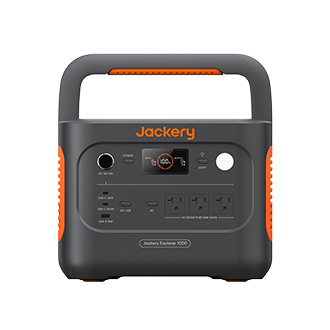
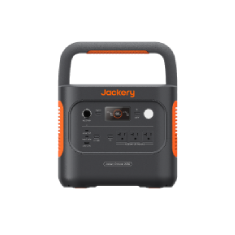
The Jackery Explorer 1000 v2 stores 1,070Wh and provides 1,500W of rated AC output while weighing about 23.8lb. That combination makes it the easiest of these three models to move between a home, RV, campsite or work area.
It is a strong fit for users powering electronics, lighting, networking equipment, a compact refrigerator or other moderate loads whose verified requirements remain inside the 1,500W continuous limit. Its three AC outlets and 100W USB-C port also make it practical for mixed device charging.
The tradeoff is simple: this is a self-contained power station. It does not accept an expansion battery, so buyers who expect their backup needs to grow should consider the HomePower 1000 Plus v2 instead.
Choose it if: low carrying weight and a compact one-piece setup matter more than future expansion.
HomePower 1000 Plus v2: the expandable choice
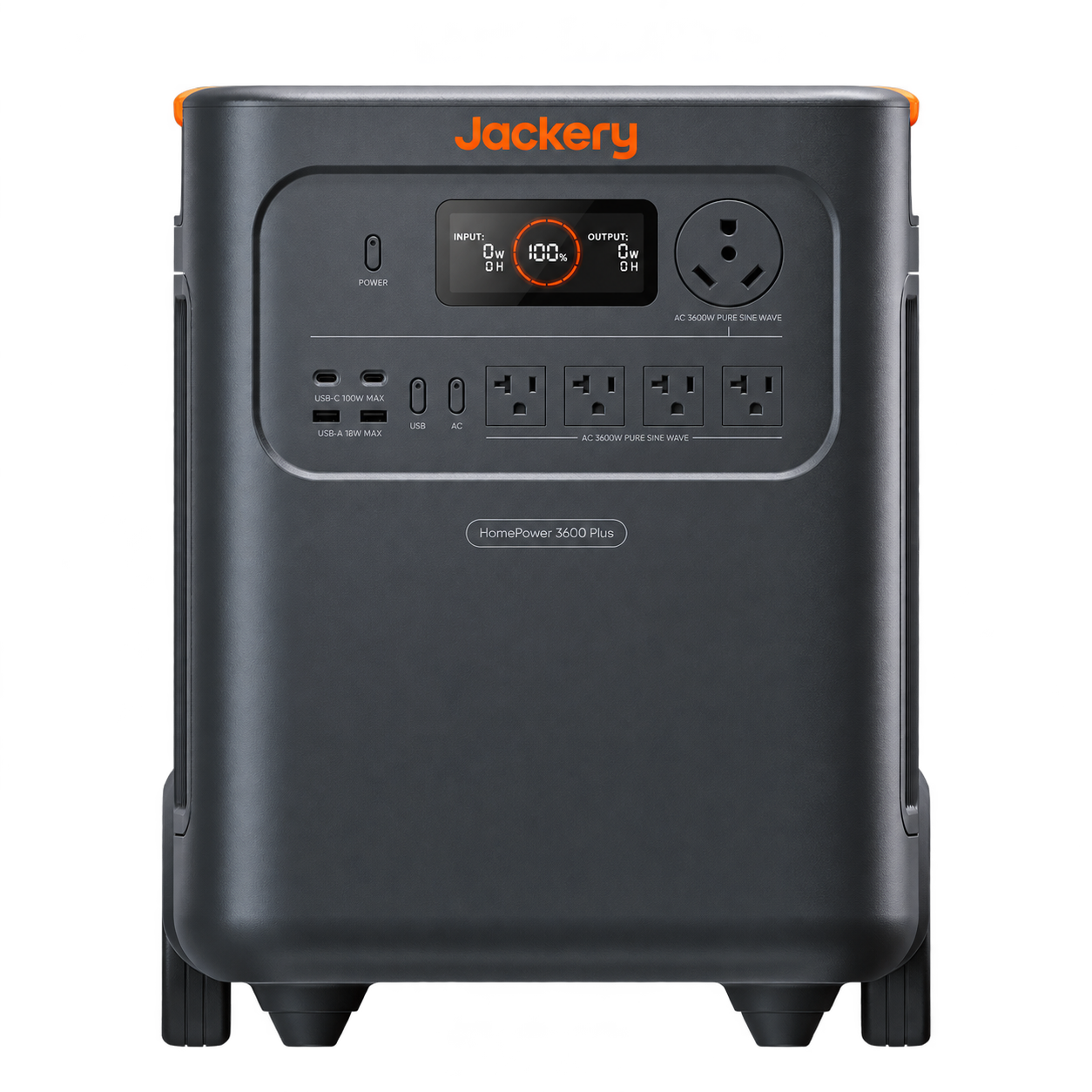
The Jackery HomePower 1000 Plus v2 starts with 1,024Wh of storage, increases rated AC output to 1,800W and still weighs about 23.8lb. Its defining advantage is not the starting capacity—it is the expansion path.
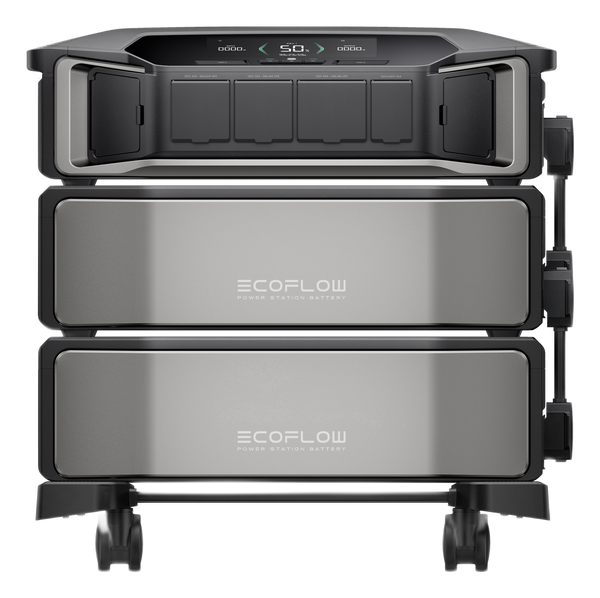
The unit supports up to five Battery Pack 2000 Plus v2 batteries, reaching 11,264Wh total. That lets a buyer start near 1kWh and add runtime later without replacing the main power station. Compatibility is specific: older Battery Pack 2000 Plus and Battery Pack 1000 Plus models are not supported.
Four AC outlets and up to 140W USB-C output also make this the most flexible connection layout of the group.
Choose it if: you want a portable starting point that can grow into a substantially larger backup system.
Explorer 1500 Ultra: more energy in one rugged enclosure
The Jackery Explorer 1500 Ultra provides 1,536Wh and 1,800W rated AC output. Compared with the two 1kWh models, the additional stored energy can extend runtime without attaching a separate battery.
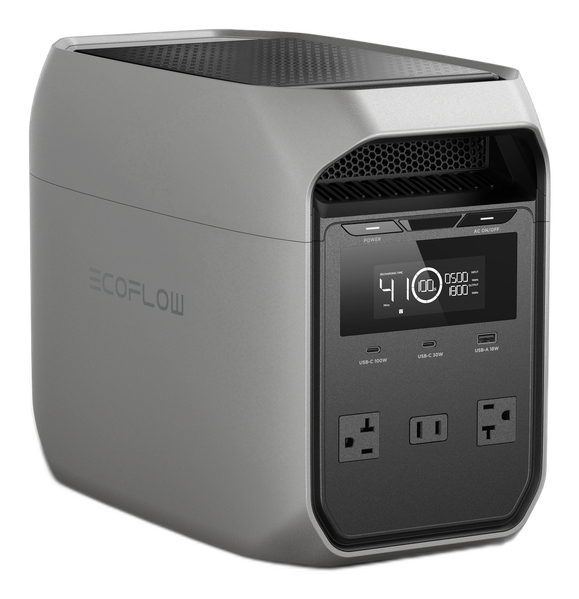
It also supports up to 800W of solar input within the manufacturer’s voltage and current limits—twice the maximum solar input listed for the two smaller units. Its IP65 rating applies only with all port covers closed; do not charge or operate it with exposed ports in rain, and never submerge it.
At about 38.6lb, the 1500 Ultra is considerably heavier. It remains portable, but it is better suited to vehicle-supported trips, a workshop or a semi-fixed backup position than frequent hand carrying.
Choose it if: you want more self-contained energy and faster potential solar recovery, and you accept the extra weight.
Which model is best for an RV?
For frequent loading and unloading, the Explorer 1000 v2 is the simplest recommendation because it combines 1,070Wh with the lowest practical carrying burden in this comparison. The HomePower 1000 Plus v2 makes more sense when the RV setup may later need an expansion battery. The Explorer 1500 Ultra is better when longer runtime is more valuable than easy lifting.
Before connecting an RV appliance, verify its continuous draw, compressor or motor startup surge and outlet requirements. A device drawing fewer watts on average can still exceed an inverter briefly when it starts.
Which model is best for home backup?
For a defined set of essentials, all three can work when appliance requirements fit the power limits. The decision changes when backup duration is uncertain:
- Use the Explorer 1000 v2 for a compact emergency kit that is easy to move.
- Use the HomePower 1000 Plus v2 if future battery expansion is part of the plan.
- Use the Explorer 1500 Ultra if you want 1.5kWh in one enclosure and do not need modular expansion.
None of these products should be described as whole-home backup without a load plan. Calculate essential loads first, including startup power, then estimate runtime using realistic duty cycles rather than assuming every appliance runs continuously.
A practical decision checklist
Choose the Explorer 1000 v2 when:
- You expect to carry the unit often.
- Your verified continuous load fits within 1,500W.
- A self-contained 1,070Wh system is enough.
Choose the HomePower 1000 Plus v2 when:
- You want 1,800W rated output at roughly the same weight.
- You need four AC outlets or 140W USB-C.
- You may add Battery Pack 2000 Plus v2 units later.
Choose the Explorer 1500 Ultra when:
- You want 1,536Wh without attaching another battery.
- Up to 800W solar input is valuable to your charging plan.
- A 38.6lb unit is acceptable for the way you travel or store it.
Frequently asked questions
Is the HomePower 1000 Plus v2 the same as the Explorer 1000 v2?
No. Their starting capacities and weights are similar, but the HomePower model provides 1,800W rated output, four AC outlets, 140W USB-C and expansion-battery support. The Explorer 1000 v2 provides 1,500W rated output and is designed as a non-expandable standalone unit.
Can the Explorer 1000 v2 use an expansion battery?
No. It is a self-contained 1,070Wh power station.
Which expansion battery works with HomePower 1000 Plus v2?
Only the Battery Pack 2000 Plus v2 is listed as compatible. Do not assume older similarly named packs will work.
Is 3,600W the continuous output of the HomePower 1000 Plus v2 or Explorer 1500 Ultra?
No. Both are rated for 1,800W continuous AC output. The 3,600W figure is the surge rating, not the continuous limit.
Can I use the Explorer 1500 Ultra in rain?
Its IP65 protection applies with all port covers closed. Do not charge or operate it with ports exposed to rain, and never submerge it.
Are solar panels included?
Only when the selected product configuration explicitly lists a solar panel. The power-station-only configurations do not include one.
Final recommendation
The best value is the model that matches the load and ownership plan—not automatically the largest unit. The Explorer 1000 v2 is the portability pick, the HomePower 1000 Plus v2 is the expandable pick, and the Explorer 1500 Ultra is the higher-capacity one-piece pick.
Compare current configurations and availability:
- Shop Explorer 1000 v2
- Shop HomePower 1000 Plus v2
- Shop Explorer 1500 Ultra
- Browse all portable power stations
Product availability, configuration and checkout pricing can change. Confirm the selected bundle and final total before payment.