

How Long Can a Portable Power Station Run a Refrigerator?
Compartir
When the grid goes down, the refrigerator is often the first appliance people want to protect. The difficult part is that a refrigerator is not a steady load: its compressor starts, stops and changes power draw throughout the day. That is why two refrigerators with the same label can deliver very different battery runtimes in the same outage.
The short answer is that a roughly 2kWh portable power station can often cover many hours of refrigerator operation, while 3kWh and 5kWh systems provide more buffer for longer outages or additional essential loads. The useful answer, however, starts with your refrigerator’s actual running watts, startup demand and duty cycle.
The basic runtime formula
Use this planning formula:
Estimated runtime = battery capacity in Wh × usable-energy factor ÷ average running watts
For a conservative first estimate, this article uses an 85% usable-energy factor to account for inverter and system losses.
For example, a 2,042Wh battery supporting a constant 150W load gives:
2,042Wh × 0.85 ÷ 150W = about 11.6 hours
That is a planning estimate for a constant 150W load—not a promise that every refrigerator will run for exactly 11.6 hours. A real refrigerator cycles, and its compressor may draw more power during startup than while running.
Running watts are not the whole story
Before choosing a power station, check four numbers or behaviors.
1. Running power
This is the wattage used while the compressor is operating. A plug-in energy meter provides better evidence than relying only on a broad appliance category estimate.
2. Startup power
The compressor can briefly demand more power when it starts. Your power station must handle that surge as well as the refrigerator’s normal running draw. Compare the appliance’s measured or manufacturer-listed starting requirement with the power station’s output limits.
3. Duty cycle
The compressor is not normally on every minute. Room temperature, thermostat setting, door openings, food load and refrigerator condition all affect how often it cycles. A warm kitchen or frequent door opening will shorten backup time.
4. Other connected loads
A router, freezer, lights and phone chargers all use energy from the same battery. Add their average wattage before calculating runtime. Capacity answers “how long”; continuous output answers “what can run at the same time.”
Worked runtime examples: 2kWh, 3kWh and 5kWh
The figures below use the products’ rated capacities and an 85% planning factor. They assume a constant load, so use them as comparisons rather than guaranteed appliance runtimes.
| Current model | Rated capacity | Rated AC output | At a constant 150W load | At a constant 300W load | Availability checked Nov. 23, 2026 |
|---|---|---|---|---|---|
| Jackery Explorer 2000 v2 | 2,042Wh | 2,200W | About 11.6 hours | About 5.8 hours | Pre-order. Units will arrive in batches; earlier orders receive priority. No specific ship date is currently confirmed. |
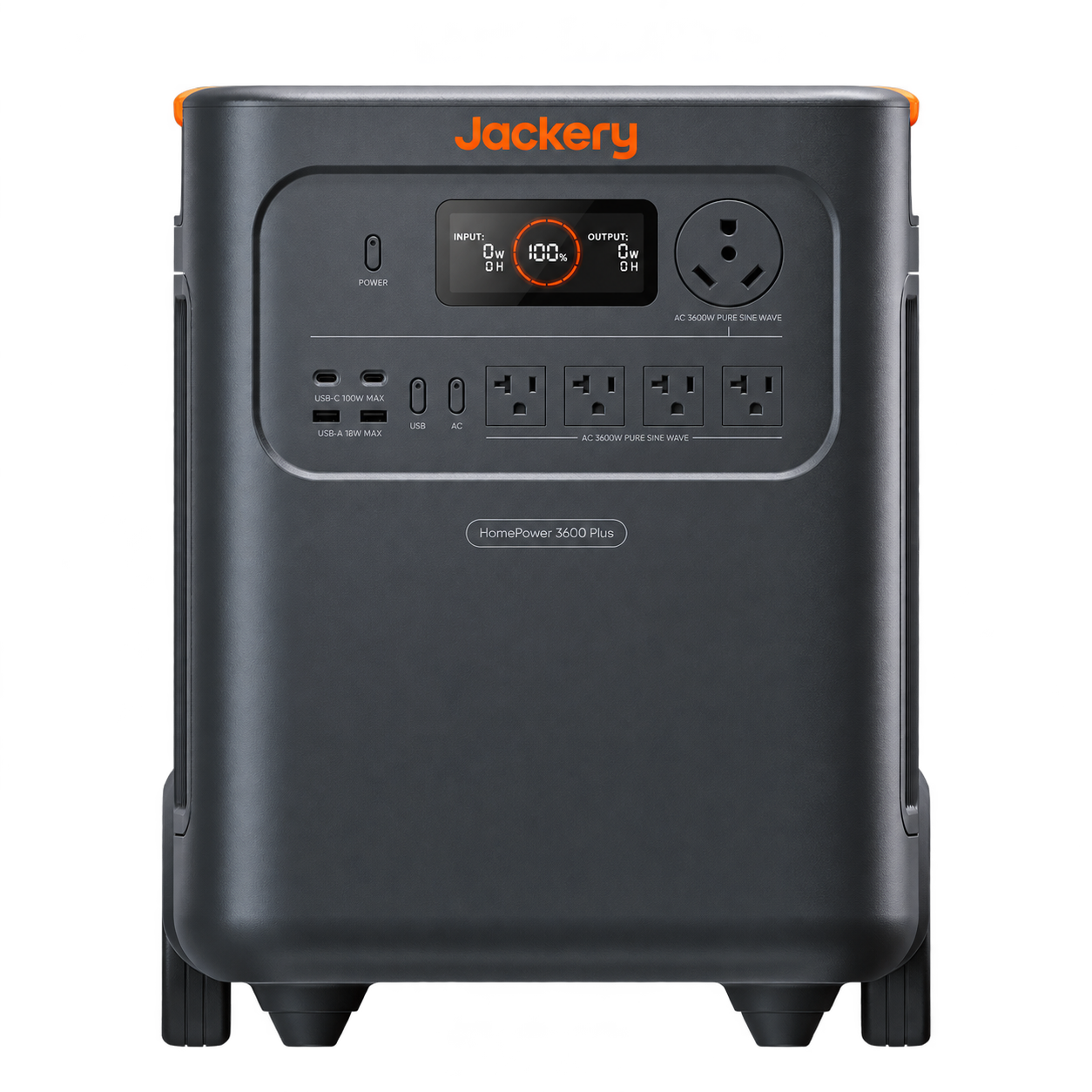
| Jackery HomePower 3000 | 3,072Wh | 3,600W | About 17.4 hours | About 8.7 hours | Pre-order; currently expected to ship by late November. |
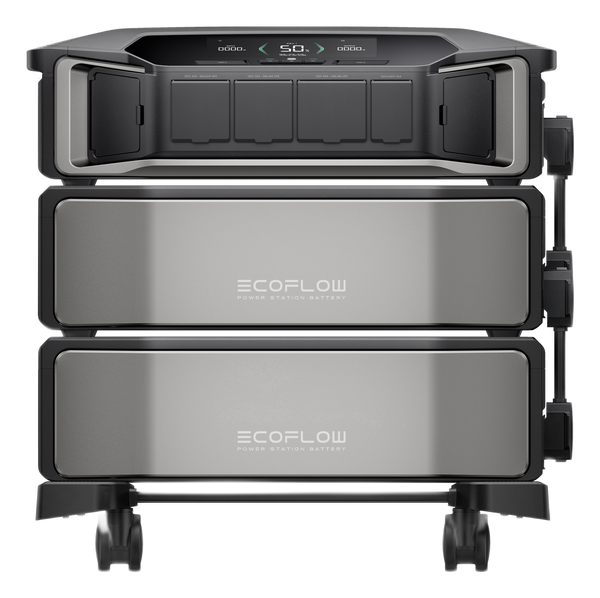
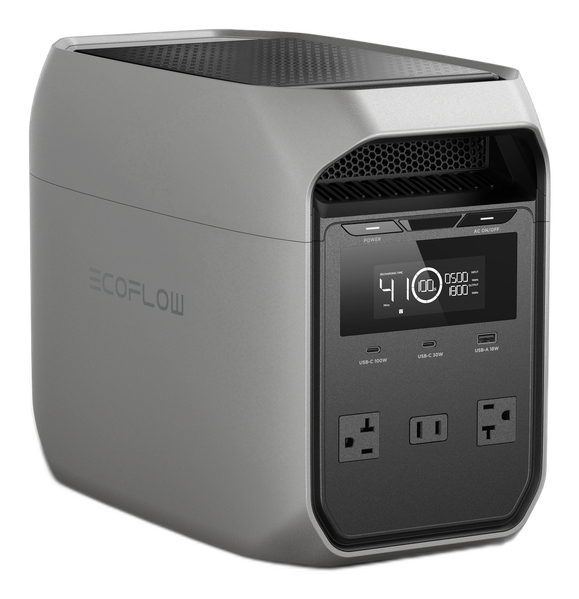
| EcoFlow TITAN 5000 | 5,017.6Wh | 7,200W | About 28.4 hours | About 14.2 hours | Availability depends on the selected TITAN configuration. Check the current product option before ordering. |
Availability can change. A refrigerator’s cycling behavior may make actual elapsed runtime longer or shorter than the constant-load examples.
Which battery size fits which situation?
Choose around 2kWh when portability matters
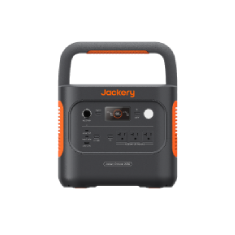
The Explorer 2000 v2 weighs about 39.5 lb and pairs 2,042Wh of capacity with 2,200W rated AC output. It is a practical starting point when the refrigerator is the primary load and you want a unit that can also move between home, RV and campsite use.
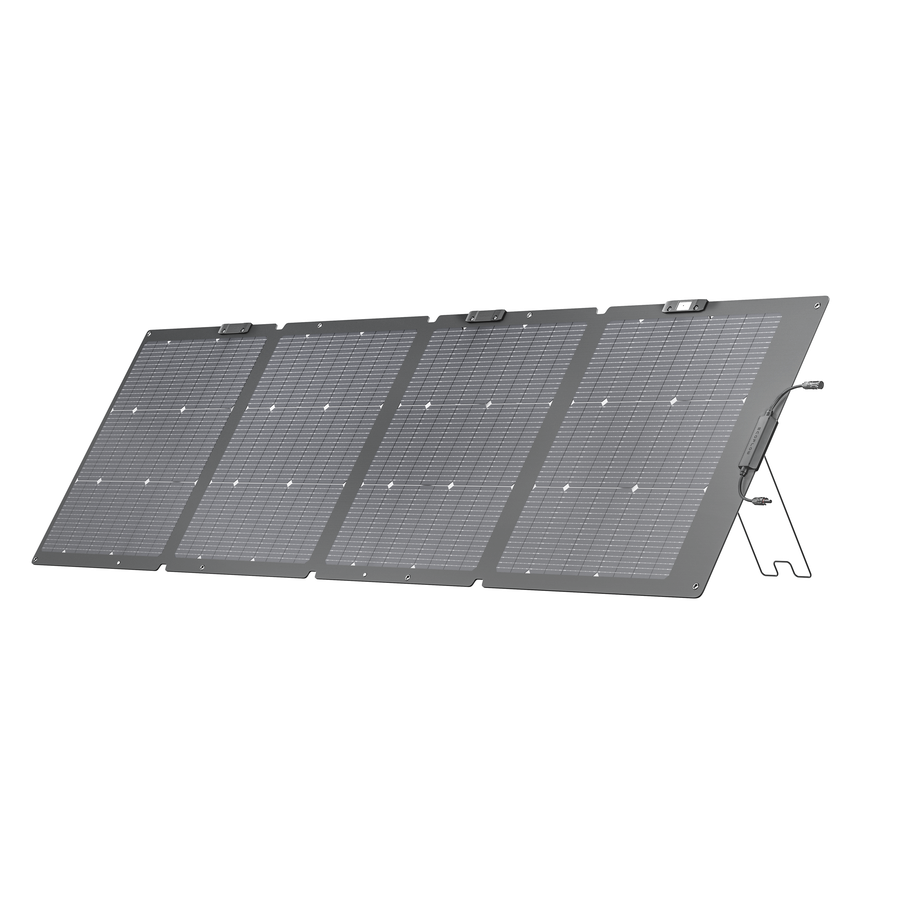
It can accept up to 400W of solar input within its specified electrical limits. Solar panels recharge the battery; they do not increase the battery’s built-in 2,042Wh capacity. Solar production also varies with weather, season, panel angle and shading.
Choose around 3kWh for more outage buffer
The HomePower 3000 provides 3,072Wh and 3,600W continuous AC output. The extra capacity gives more room for refrigerator cycling plus a router, lights or another carefully managed essential load. It is a standalone model and does not support expansion batteries, so buyers who expect their capacity needs to grow should account for that before ordering.
Choose around 5kWh for multiple essentials or a scalable home plan
The TITAN 5000 starts at 5,017.6Wh and 7,200W AC output, with 120V/240V capability. That larger platform is more appropriate when the goal extends beyond one refrigerator to multiple essential circuits or higher-demand appliances. Home integration requires compatible equipment and a qualified installer; the Smart Home Panel 10 and installation are not included unless the selected configuration explicitly lists them.
A better way to estimate your refrigerator’s real runtime
For a more useful estimate:
-
Plug the refrigerator into an energy meter for at least 24 hours.
-
Record total watt-hours used during the test period.
-
Add the daily energy of any freezer, router, lights or other backup loads.
-
Multiply the power station’s rated Wh by 0.85 for a conservative planning value.
-
Divide usable Wh by the combined average hourly consumption.
-
Keep a reserve instead of planning to use 100% of calculated energy.
If a refrigerator consumes 1,200Wh over 24 hours, its average consumption is 50W across the full day—even though the compressor may draw much more while it is running. A 2,042Wh power station with an estimated 1,736Wh of usable AC energy would therefore provide roughly 34.7 hours in that simplified example. Actual results still depend on startup behavior, temperature, battery condition and other loads.
How to extend refrigerator runtime during an outage
-
Keep the doors closed as much as possible.
-
Cool the refrigerator fully before severe weather arrives.
-
Avoid placing the power station in a sealed cabinet; keep its vents clear.
-
Do not expose the power station to rain, standing water or condensation.
-
Disconnect nonessential loads when the battery level becomes more important than convenience.
-
If using solar, confirm panel voltage, current, connector requirements and the product’s solar-input limit.
-
Never backfeed a wall outlet. Use approved transfer equipment and a qualified electrician for home-circuit integration.
Frequently asked questions
Can a 2,000Wh power station run a full-size refrigerator?
Often, yes, provided the refrigerator’s running and startup requirements are within the power station’s limits. Runtime depends on the refrigerator’s energy use, cycling, ambient temperature and any additional connected loads.
Does a 200W solar panel add 200Wh of battery capacity?
No. A solar panel supplies charging power under suitable conditions; it does not add storage capacity. A 2,042Wh power station remains a 2,042Wh power station whether or not solar panels are connected.
Why is my real runtime shorter than the formula predicts?
Common reasons include inverter losses, high startup demand, hot weather, frequent door openings, an aging refrigerator, other connected devices and battery temperature or condition.
Can I plug a refrigerator into a power station indoors?
Battery power stations do not produce gasoline-generator exhaust, but the unit still needs dry conditions, ventilation and clearance around its vents. Follow the product manual and do not use damaged cables or overload the output.
Is surge output the same as continuous output?
No. Surge output is temporary. Compare normal appliance demand with continuous output and verify that startup demand remains within the product’s allowed surge behavior.
Should I choose Explorer 2000 v2, HomePower 3000 or TITAN 5000?
Choose based on measured load, desired backup duration, portability, output requirements and whether you need future expansion or home integration. Explorer 2000 v2 emphasizes portability, HomePower 3000 adds non-expandable 3kWh-class buffer, and TITAN 5000 is a larger scalable platform for broader home-backup planning.
Related LIVVOLT guides
-
HomePower 3000 vs Explorer 2000 v2: Which Backup Battery Fits Your Home or RV?
-
How to Size a Portable Power Station: Wh Math That Actually Works
CTA
Measure your refrigerator’s actual energy use, list the other essentials you want to protect, and then compare the current Jackery Explorer 2000 v2, Jackery HomePower 3000 and EcoFlow TITAN 5000 configurations. Need help checking startup watts or building a load list? Contact LIVVOLT support.