


Portable Power Station Buying Guide 2026

Shopping for a portable power station shouldn't feel like decoding a spec sheet. Yet most buyers get stuck on one misleading number — the wattage printed on the box — and end up with a unit that dies halfway through a camping trip or can't start their fridge. This 2026 buying guide cuts through the marketing so you can pick the right capacity, output, and model the first time.
As an authorized EcoFlow dealer, we sell the same units EcoFlow ships direct — with US-based support, a 5-year warranty, and bundle pricing you won't find on marketplaces. Everything below reflects real specs, not hype.
1. Watt-hours (Wh) is the only number that matters
A power station's capacity is measured in watt-hours (Wh) — how much total energy it stores. Think of it like a fuel tank. A "1000W" rating, by contrast, tells you only the maximum speed it can pour energy out at (the nozzle size), not how far you'll get.
Rule of thumb: divide the station's Wh by the device's watts to estimate runtime. A 500Wh station runs a 50W laptop ~10 hours (minus ~10% conversion loss). It cannot run a 1500W space heater for long, no matter how "powerful" the box looks.

2. List your devices and do the math
Grab a notepad and add up what you'll power in a typical day:
| Device | Typical Draw | Daily Need |
|---|---|---|
| Smartphone | 10W | ~20Wh (2 charges) |
| Laptop | 60W | ~300Wh (full day) |
| LED camping lights | 10W | ~60Wh (evening) |
| Portable fridge (12V) | 40W avg | ~500–900Wh |
| Wi-Fi router | 10W | ~240Wh (full day) |
| Full-size fridge (home) | 150W avg | ~1,500–2,000Wh |
Add a 15% buffer for inverter loss, then round up. That final number is your minimum Wh. If you want to power a full-size fridge through an outage, you're already in DELTA Pro 3 territory (3,000Wh+ and expandable).
3. Pick by use case
Weekend trips & day adventures → RIVER 3 Series
Phones, lights, a drone, maybe a small fan. The RIVER 3 family (192–858Wh) is light enough to toss in a backpack and charges from a car outlet on the drive up. The RIVER 3 Plus adds a 12V port for 12V fridges. Perfect for 1–3 day outings.
Family camping & van life → DELTA 3 Series
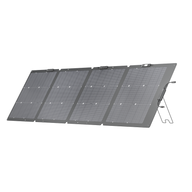
Running a fridge, laptops, and a projector demands more. The DELTA 3 line (1,024–2,048Wh) covers a basecamp for a weekend and pairs with a 220W solar panel for all-day top-ups. The DELTA 3 Plus is our most popular mid-size unit for this exact job.

Home backup & essential appliances → DELTA Pro 3
When the grid goes down, you want an appliance-grade unit. The DELTA Pro 3 starts at 3,000Wh and expands toward 48kWh — enough to keep a fridge, internet, medical devices, and lights running for days, not hours. See our Home Backup Power 101 guide for full runtime math.
4. Check the outputs, not just the tank
- AC outlets — for anything with a wall plug (laptop chargers, mini-fridges, power tools).
- USB-C PD (100W+) — fast-charges modern laptops and phones from a single cable.
- 12V / car port — runs fridges and lights efficiently without AC conversion loss.
- Surge rating — fridge compressors and power tools spike on startup; confirm the station handles the brief surge.
5. Recharge speed & solar
A dead station is useless in an emergency. Look for fast AC recharge (many Livvolt units hit 80% in under an hour) and solar input. A 400W panel can fully refill a DELTA Pro 3 in a sunny day — turning a multi-day outage into a non-event. Compare the DELTA 3 and DELTA Pro 3 side by side in our comparison guide.
6. The three mistakes to avoid
- Buying by watts, not Wh. A 2000W station with 300Wh runs less than a 500W station with 1000Wh.
- Ignoring surge. Your fridge's startup spike can trip an undersized unit.
- Forgetting expansion. If needs might grow, choose a model with extra-battery support rather than buying twice.
7. FAQ — buying a portable power station
Is a portable power station safe indoors?
Yes. LiFePO₄ stations like the EcoFlow DELTA and RIVER lines are fume-free and safe in a kitchen or nursery — unlike gas generators, which must stay outdoors.
Can I use it as a home backup?
Absolutely. For essentials (fridge, Wi-Fi, lights), a DELTA Pro 3 covers days of outage. For whole-home coverage, add extra batteries.
Why buy from an authorized dealer instead of the manufacturer?
You get the identical unit plus US-based warranty handling, faster local support, and bundle savings. We're an authorized EcoFlow dealer — every unit ships with the full manufacturer warranty.
Ready to find your match?
Browse the full Livvolt lineup — from the trail-ready RIVER 3 to the whole-home DELTA Pro 3 — and filter by the capacity your math says you need.
Explore Power Stations →Livvoltpower is an authorized EcoFlow dealer. Every unit ships with a 5-year warranty and US-based support. Prices and availability subject to change.