


Home Backup Power 101: Best Station for Outages 2026

Outages aren't what they used to be. Grid stress, wildfires, and winter storms now leave families dark for hours — sometimes days. The old answer was a gas generator: loud, smelly, and banned indoors. The new answer is quieter, safer, and sits in your hallway ready to go.
This is your plain-English introduction to home backup power with a portable station — what it runs, how to size it, and how to set it up before the lights flicker.
1. Why a power station beats a gas generator
- Indoor-safe. No fumes, no carbon monoxide. Use it in the kitchen or nursery.
- Silent. Sleep through the night; your neighbors won't hear a thing.
- Instant. No pull-cords or fuel mixing — press a button and you're live.
- Rechargeable. Top it up from the wall, your car, or the sun.

2. What you can actually run (and for how long)
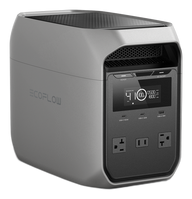
A DELTA Pro 3 (3,000Wh) covers the essentials comfortably. Here's a realistic runtime picture:
| Appliance | Typical Draw | Runtime on 3,000Wh |
|---|---|---|
| Full-size fridge | ~150W avg | ~18–20 hours |
| Wi-Fi router + phones | ~20W | 5+ days |
| Lights (LED, whole home) | ~60W | ~40 hours |
| Laptop (work from home) | ~60W | ~40 hours |
| Medical device (CPAP) | ~40W | ~60 hours |
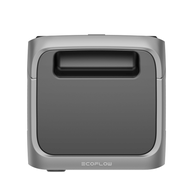
Add extra batteries and the same unit scales toward 48kWh — enough for multi-day whole-home resilience. Build a full kit in our Power Outage Preparedness guide.
3. Size it to your priorities
- Fridge + internet + lights: a single DELTA Pro 3 is plenty.
- Add medical devices or a well pump: keep one station dedicated to them, or step up to the DELTA Pro (Classic) for 3.6kWh expandable to 25kWh.
- Whole-home for days: DELTA Pro 3 + extra batteries, or two units in parallel.
4. Solar = free recharge during long outages
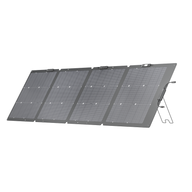
When the grid is down for days, wall charging stops too. A 400W solar panel keeps a DELTA Pro 3 replenishing in daylight — so a three-day storm becomes a minor inconvenience. Even apartment dwellers can run a balcony panel. The DELTA Pro 3 + 400W Solar Bundle ships ready to go.

5. Set up in three steps
- Place it. Keep the station in a dry, ventilated spot near the devices you'll power.
- Plug in. Connect your fridge, router, and chargers to the AC and USB ports.
- Keep it charged. Leave it on wall power (it passes through to devices) so it's full the moment an outage hits.
6. Safety & maintenance
- Avoid overloading — stay under the rated continuous and surge wattage.
- Store at 50–80% charge if unused for months; top up every 3–6 months.
- Keep away from direct heat and standing water.
7. FAQ — home backup power
Will a portable power station run my whole house?
For essentials (fridge, internet, lights, medical), yes — a DELTA Pro 3 with extra batteries covers days. For true whole-home (HVAC, well pump, stove), plan multiple units or a transfer-switch setup.
How long does it take to recharge?
Most Livvolt stations hit 80% from wall power in under an hour. Solar recharge time depends on panel wattage and sunlight — a 400W panel refills a DELTA Pro 3 in a sunny day.
Make your home outage-proof
Explore the DELTA Pro 3 and expansion batteries — appliance-grade backup that's ready the instant the grid doesn't show up.
Shop Home Backup →Livvoltpower is an authorized EcoFlow dealer. Every unit ships with a 5-year warranty and US-based support.