
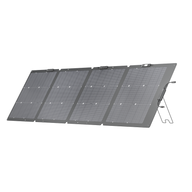


Best Solar Generator 2026: EcoFlow Picks for Home, Camping & RV

A solar generator is simply a portable power station plus solar panels — no gas, no fumes, no noise. In 2026 it has become the default search for anyone wanting off-grid power that recharges from the sun. Here are the best solar generator setups we sell as an authorized EcoFlow dealer, sized for home backup, camping, and RV life, with real numbers on what each one can run.
1. What a solar generator actually is
The term solar generator is a friendly name for a battery power station charged by photovoltaic panels. The battery stores energy, the panels harvest it, and an inverter turns DC into wall-outlet AC. Unlike a gas generator, there is nothing to refill and nothing to maintain beyond keeping the battery healthy.
- Silent: runs indoors, in a tent, or beside a sleeping baby with zero noise.
- Fume-free: safe inside during a blackout — no carbon monoxide risk.
- Renewable: top up from sunlight anywhere, even through multi-day outages.
2. Best solar generator by use case (2026)
Match capacity to what you actually run. Here are our dealer-backed picks:
| Use case | Station | Solar | Why |
|---|---|---|---|
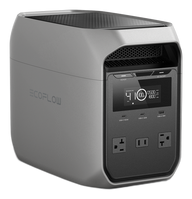
| Camping / day trips | RIVER 3 + 1 panel | 110–160W | Light, sub-10 lb, charges phones, lights, a mini-fridge |
| Family camping / RV | DELTA 3 + 220W | 220W | 1,024Wh runs fridge + AC + devices for a full day |
| Home backup | DELTA Pro 3 + 400W | 400W | Expandable to 48kWh, powers fridge, Wi-Fi, medical gear |
| Off-grid cabin | DELTA 3 Max + 2×220W | 440W | 2,048Wh base, scales with extra batteries |

3. How much solar do you need?
Solar wattage decides how fast you recover capacity, not how much you can run. A good rule: aim for solar equal to about 1× your daily watt-hours of use.
- 100–160W: tops up a RIVER 3 for phones and lights on a weekend trip.
- 220W: the sweet spot for a DELTA 3 running a campsite fridge.
- 400W+: needed to refill a DELTA Pro 3 overnight after a home-backup day.
4. Solar generator vs gas generator
For most homeowners and campers the solar generator wins on every comfort metric:
| Solar generator | Gas generator | |
|---|---|---|
| Noise | Silent | 60–70 dB |
| Fumes | None | CO risk indoors |
| Fuel | Sunlight (free) | Gasoline |
| Indoor safe | Yes | No |
| Start | Button | Pull-cord |
5. Build your kit
Start with the station sized to your biggest load, then add the panel count that matches your recharge window. Read our sizing guide and solar panel guide before you buy.

6. FAQ — solar generators
Is a solar generator worth it in 2026?
Yes for anyone who values silent, fume-free, renewable backup. If you only need occasional jobsite power and have gas handy, a generator still wins on raw cost — but it cannot run safely indoors.
How long does a solar generator last?
EcoFlow LiFePO4 units deliver 3,000+ cycles to 80% capacity — roughly a decade of weekly use. The panels last 20+ years.
Can it run a refrigerator?
A DELTA Pro 3 or DELTA 3 runs a full-size fridge for many hours; see our fridge runtime guide for the math.
Build your solar generator
Start with a DELTA 3 or DELTA Pro 3 and add the panel that fits your trip. New, dealer-backed, 5-year warranty, US support.
Shop DELTA power stations →Livvoltpower is an authorized EcoFlow dealer. Every unit ships with a 5-year warranty and US-based support. Runtime and capacity figures are illustrative — actual performance depends on your devices, ambient conditions, and configuration.